
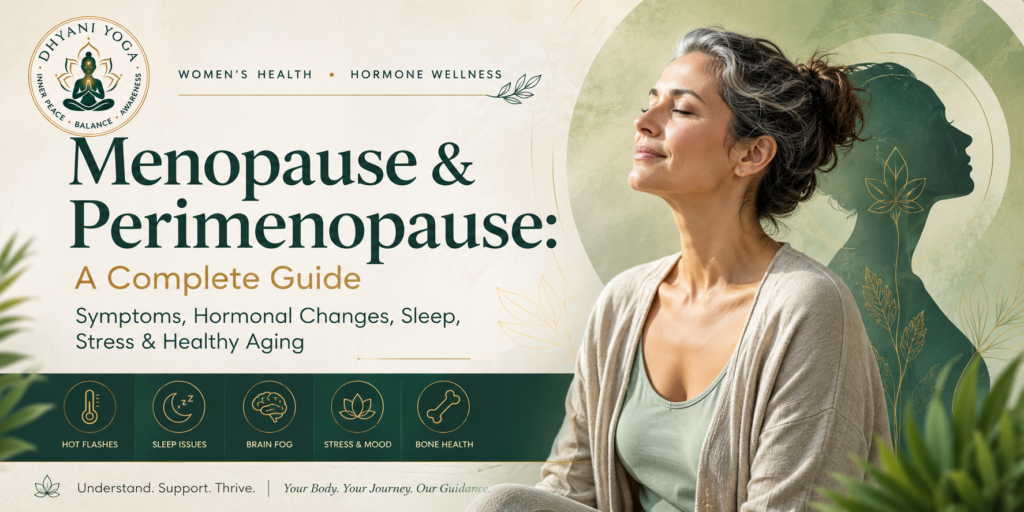
Understanding what changes during perimenopause and menopause—and how movement, yoga, breathing, sleep and lifestyle can support your well-being.
Menopause Is Not the End of Your Health Journey
For many women, menopause arrives with a strange mix of questions.
Why am I suddenly waking up at night?
Why are my periods changing?
Why do I feel exhausted even after sleeping?
Why am I experiencing hot flashes?
Why does my body feel different?
Why am I struggling with concentration?
And perhaps the biggest question:
“Is this just something I have to live with?”
Menopause is a natural biological transition, not a disease. But natural does not mean insignificant.
The menopausal transition can affect sleep, mood, menstrual cycles, body composition, sexual health, bone health and cardiovascular health. Symptoms can be mild for some people and significantly disruptive for others.
Understanding what is happening in your body can make this transition feel far less mysterious.
This guide explains perimenopause, menopause and postmenopause, the symptoms you may experience, why sleep and stress can become particularly important, and where practices such as yoga, movement, breathing and meditation may fit into a broader approach to well-being.
Perimenopause vs. Menopause: What’s the Difference?
These two terms are often used interchangeably, but they mean different things.
Perimenopause
Perimenopause is the transition leading up to menopause.
During this stage, ovarian hormone production changes and hormone levels can fluctuate. One of the earliest signs is often a change in your menstrual cycle—periods may become shorter, longer, heavier, lighter or less predictable.
Perimenopause can last for several years, and symptoms can change over time.
You may experience:
- Irregular periods
- Hot flashes
- Night sweats
- Sleep difficulties
- Mood changes
- Anxiety
- Brain fog
- Fatigue
- Headaches or migraines
- Joint and muscle discomfort
- Changes in sexual health
- Vaginal dryness
- Changes in body composition
Not everyone experiences all of these symptoms, and some people experience very few symptoms at all.
Menopause
Menopause is a specific point in time—not a multi-year period.
Natural menopause is generally defined as 12 consecutive months without a menstrual period, when there is no other obvious physiological or medical explanation. Most women experience natural menopause between approximately 45 and 55 years of age.
Once menopause has occurred, the years that follow are called postmenopause.
In simple terms:
Perimenopause → Menopause → Postmenopause
Think of perimenopause as the transition, menopause as the milestone, and postmenopause as the life stage that follows.
Why Does Menopause Happen?
Menopause occurs because ovarian follicular function declines, leading to significant changes in reproductive hormone production, including estrogen.
That hormonal transition can influence much more than menstruation.
Estrogen is involved in numerous processes throughout the body. As hormone levels change, some women notice changes involving:
Temperature regulation → sleep → mood → vaginal and urinary health → bone health → body composition → cardiovascular risk
This is one reason menopause shouldn’t be viewed simply as:
“My periods have stopped.”
It is a broader transition in women’s health.
The Symptoms Nobody Warned You About
Menopause does not look the same for everyone.
Some women experience only minor changes. Others experience symptoms that affect work, relationships, sleep and everyday life.
Here are some of the most common experiences.
1. Hot Flashes & Night Sweats
A hot flash can arrive suddenly—a wave of heat through the face, neck or chest, sometimes accompanied by sweating, flushing or a noticeable heartbeat.
When these episodes happen during sleep, they’re often called night sweats.
And the problem may not end when the hot flash ends.
A disrupted night can lead to:
Poor sleep → daytime fatigue → irritability → difficulty concentrating → reduced quality of life
This is why addressing menopause-related sleep problems can be an important part of overall well-being.
2. Menopause and Sleep Problems
You may be exhausted but still struggle to fall asleep.
Or perhaps you fall asleep normally but wake repeatedly during the night.
Night sweats can contribute to disrupted sleep, while hormonal changes and other symptoms may also affect sleep quality.
This creates a frustrating cycle:
Poor sleep → fatigue → increased stress → less resilience → another difficult night
A consistent evening routine, regular physical activity, relaxation practices and good sleep habits may all be useful components of a broader sleep-support strategy.
For some people, gentle evening yoga or breathing practices can become part of that routine.
Yoga should not be presented as a treatment for insomnia, but it can be used as a mind-body practice that supports relaxation and healthy movement.
3. Menopause Brain Fog
You walk into a room and forget why you went there.
A name doesn’t come to mind.
You’re reading something and suddenly realize you’ve absorbed none of it.
Many women describe these experiences as “brain fog.”
Memory and concentration changes can occur during perimenopause and menopause.
But brain fog doesn’t automatically mean something is seriously wrong.
Sleep disruption, stress, mood changes and hormonal changes can all intersect during this stage.
If cognitive symptoms are persistent, severe, rapidly worsening or concerning to you, talk with a healthcare professional rather than assuming menopause is the only explanation.
4. Mood Changes, Anxiety & Emotional Well-Being
Menopause isn’t purely physical.
Hormonal changes can coincide with changes in mood, anxiety and emotional well-being.
And life circumstances matter too.
Many women enter perimenopause while simultaneously managing:
- Careers
- Parenting
- Aging parents
- Relationships
- Financial responsibilities
- Changing sleep patterns
- Changes in body image
- Major life transitions
So the experience of menopause is both biological and deeply personal.
This is one reason practices focused on awareness, breathing, movement and relaxation may be useful as complementary tools for overall well-being.
They are not substitutes for mental-health care when professional support is needed.
5. Joint Pain, Muscle Aches & Changes in the Body
Another commonly reported experience is increased muscle and joint discomfort.
You may notice:
- Morning stiffness
- Tight hips
- Aching knees
- Shoulder tension
- Back discomfort
- Reduced flexibility
- Changes in body composition
These changes can make movement feel less appealing.
But avoiding movement altogether can create another problem.
The goal isn’t to punish your body with harder exercise.
The goal is to find forms of movement that help you maintain:
Mobility + strength + balance + confidence
Yoga can be one component of a movement routine, alongside appropriate resistance training, cardiovascular activity and other forms of physical activity.
Menopause and Weight Gain: Is It Really “Just Hormones”?
This is one of the most searched—and misunderstood—questions surrounding menopause.
Body composition can change during the menopausal transition, but attributing every change in weight to a single hormone would be an oversimplification.
Age, muscle mass, physical activity, sleep, nutrition, stress, genetics and other factors can all influence body composition.
Instead of asking:
“How do I lose menopause weight as quickly as possible?”
A more useful question may be:
“How can I support my strength, mobility, metabolic health and overall well-being as my body changes?”
That shift matters.
Healthy aging is not simply about a number on a weighing scale.
Menopause and Bone Health
Bone health deserves particular attention during and after menopause.
Declining estrogen levels are associated with increased bone loss, and osteoporosis and fractures become important health considerations as women age.
This is one area where “gentle movement” shouldn’t mean movement only.
Maintaining muscle strength, balance and appropriate weight-bearing or resistance exercise can be important parts of healthy aging.
If you have osteoporosis, osteopenia, a history of fractures or another medical condition affecting your bones, speak with an appropriate healthcare professional before beginning a new exercise program.
A Different Way to Think About Menopause
Perhaps the most important shift is this:
Menopause is not something your body is “failing” at.
It is a biological transition.
Your body is changing.
And your health strategy can change with it.
Instead of chasing a perfect version of your younger body, the focus can gradually move toward:
Strength
Mobility
Sleep
Bone health
Cardiovascular health
Stress management
Mental well-being
Healthy relationships
Quality of life
Long-term independence
That is a much bigger picture of health.
Where Does Yoga Fit Into Menopause?
Yoga is not a replacement for medical care, hormone therapy, medication, psychotherapy, strength training, nutrition or other clinically appropriate treatments.
But yoga can be one part of a broader lifestyle approach.
Depending on the practice and the individual, yoga can involve:
- Gentle mobility
- Balance work
- Strength-oriented poses
- Breathing exercises
- Mindfulness
- Relaxation
- Body awareness
- Stress-management practices
The key is individualization.
A vigorous practice that feels empowering to one person may feel exhausting to another.
During menopause, there is no prize for pushing through symptoms.
The better question is:
“What type of movement helps me feel stronger, calmer and more capable?”
A Simple Dhyani Approach to Menopause
At Dhyani Yoga, we believe yoga should be approachable, intelligent and adaptable.
Rather than promising to “balance your hormones” with a handful of poses, we focus on supporting the whole person.
1. Move
Choose movement that matches your current energy, mobility and experience.
2. Breathe
Slow, comfortable breathing can become a simple tool for relaxation and body awareness.
3. Strengthen
Healthy aging requires more than flexibility. Strength and balance matter too.
4. Recover
Rest isn’t laziness.
Sleep and recovery are part of health.
5. Observe
Your symptoms are information.
Notice patterns in your sleep, energy, cycle, mood and physical comfort.
6. Seek appropriate care
Yoga can complement healthcare. It should never replace it.
The 10-Minute Menopause Reset
If you’re having a difficult day, your practice doesn’t need to be complicated.
Try creating a short routine built around:
1–2 minutes: Comfortable breathing and settling
2–3 minutes: Gentle spinal and shoulder mobility
2 minutes: Hip and lower-body mobility
2 minutes: Balance or light strength work appropriate for your ability
1–2 minutes: Relaxation or quiet breathing
The purpose isn’t to “fix menopause.”
The purpose is to give your body a few minutes of intentional movement, attention and recovery.
[Watch: Dhyani Yoga — Hormone Reset Series]
When Should You Talk to a Healthcare Professional?
Menopause symptoms are common, but common does not mean you have to suffer without support.
Talk with a healthcare professional if symptoms are affecting your daily life, sleep, relationships, work or emotional well-being.
Changes in menstrual bleeding should also be discussed with a healthcare professional, particularly if the pattern is unusually heavy or concerning.
And there is one particularly important rule:
Any vaginal bleeding after menopause should be evaluated.
If you have gone 12 months without a period and then experience vaginal bleeding—even spotting—it should be checked by a healthcare professional. Postmenopausal bleeding can have several causes and should not simply be assumed to be a normal part of menopause.
Frequently Asked Questions About Menopause
What is the difference between perimenopause and menopause?
Perimenopause is the transition leading up to menopause, during which menstrual cycles and hormone levels can change. Menopause is reached after 12 consecutive months without a menstrual period when there is no other obvious cause.
What are the first signs of perimenopause?
Changes in your menstrual cycle are often among the earliest signs. Periods may become irregular, shorter, longer, heavier or lighter. Other symptoms can develop as the transition progresses.
What are the most common menopause symptoms?
Symptoms can include hot flashes, night sweats, sleep problems, mood changes, anxiety, memory or concentration difficulties, vaginal dryness, urinary changes, headaches, muscle aches and joint pain. Not everyone experiences the same symptoms.
Can yoga help with menopause symptoms?
Yoga can be used as a complementary mind-body practice involving movement, breathing, relaxation and mindfulness. It should not be presented as a cure for menopause or as a replacement for medical treatment. The most appropriate practice depends on the individual’s health, symptoms, fitness and experience.
Can yoga help with menopause sleep problems?
A gentle yoga or breathing routine may be useful as part of a relaxing bedtime routine for some people. However, persistent insomnia or severe sleep disruption deserves appropriate medical evaluation rather than relying on yoga alone.
Can menopause cause brain fog?
Some women experience changes in memory and concentration during perimenopause and menopause. Sleep disruption, stress, mood and hormonal changes can all contribute. Persistent or concerning cognitive changes should be discussed with a healthcare professional.
Can you still get pregnant during perimenopause?
Yes. Pregnancy remains possible during perimenopause because ovulation can still occur. WHO recommends contraception to prevent unintended pregnancy until after 12 consecutive months without menstruation.
What happens after menopause?
The period after menopause is called postmenopause. Some symptoms may improve, while others can continue. Long-term health considerations—including bone and cardiovascular health—also become increasingly important.
Menopause Is a Transition. Your Health Can Evolve With It.
There is no single “menopause experience.”
For one woman, the biggest challenge may be hot flashes.
For another, it may be insomnia.
For someone else, it may be anxiety, brain fog, joint discomfort or changes in body composition.
And for many, it may be several things at once.
The answer isn’t to fight your body.
It is to understand it.
To move with it.
To strengthen it.
To rest when it needs recovery.
To ask for medical support when necessary.
And to build habits that support the woman you are becoming—not the person you were expected to remain.
Menopause is not the end of vitality.
It can be the beginning of a more informed relationship with your health.
Explore Dhyani’s Hormone Reset Series
If you’re navigating perimenopause or menopause, explore Dhyani Yoga’s Hormone Reset Series for educational videos and yoga practices designed around common experiences during the menopausal transition.
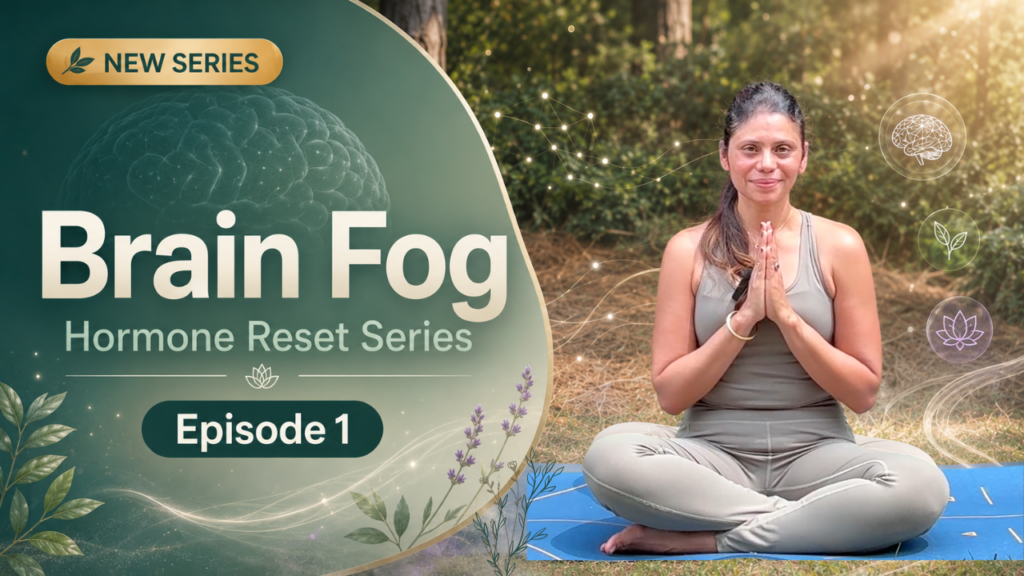
Episode 2 — Hot Flashes
More episodes coming soon
[Explore the Previous Body Restore Series →]
Medical Disclaimer
This article is intended for general educational and informational purposes only. It is not medical advice, diagnosis or treatment, and it does not replace consultation with a qualified healthcare professional.
Menopause and perimenopause can affect people differently. Symptoms may have causes unrelated to menopause, and individual medical history can change which treatments or forms of exercise are appropriate.
Do not start, stop or change medication or hormone therapy based solely on information in this article.
If you have new, severe, persistent or concerning symptoms—or symptoms that significantly affect your daily life—speak with an appropriately qualified healthcare professional.
This article has not been medically reviewed.
Evidence & Sources
The information in this article is based primarily on guidance and educational resources from recognized health organizations, including:
- World Health Organization (WHO) — Menopause
- American College of Obstetricians and Gynecologists (ACOG) — The Menopause Years
- National Health Service (NHS) — Menopause and Perimenopause
- NHS — Symptoms of Menopause and Perimenopause
Sources accessed/updated for this article: August 2026.
About Dhyani Yoga
Dhyani Yoga is a modern yoga and wellness education platform focused on helping people understand their bodies, build sustainable movement practices and develop a deeper relationship between physical and mental well-being.
Our approach combines yoga, movement, breathwork, mindfulness and health education—without promising quick fixes or replacing appropriate medical care.
Learn. Move. Breathe. Live Well.